6850 Austin Center Blvd. Blg. 2, Ste 225
Austin, TX 78731


What My Trip to Malawi Taught Me About Breastfeeding Support
What My Trip to Malawi Taught Me About Breastfeeding Support
When I traveled to Malawi earlier this summer, I thought I knew what I was there to do.
I was there to teach.
I had the opportunity to work alongside midwives and healthcare professionals who care for mothers and babies in communities where resources can look very different from what we're accustomed to here in the United States.
I came prepared to share my experience as a nurse and lactation consultant.
What I didn't fully anticipate was how much I would learn from them.
Breastfeeding Support Looks Different Everywhere
Working in lactation, I'm used to talking with parents about pumps, bottles, feeding positions, milk supply, latch, and all the other things that can make feeding feel complicated.
In Malawi, I was reminded that breastfeeding support doesn't always come with access to all of those tools.
Imagine having a premature baby who is not strong enough to breastfeed, but not having an electric pump available.
Or developing painful engorgement or mastitis when getting to a hospital could require hours of travel.
The challenges are very real.
And yet, I watched healthcare professionals find ways to support mothers and babies with the resources available to them.
That kind of resourcefulness made a lasting impression on me.
What Happens When a Mother Isn't There?
One of the hardest things to think about is what happens to a baby when their mother dies during childbirth.
In my work, I spend so much time thinking about how we can help mothers successfully feed their babies. In Malawi, I was confronted with situations where the question was much bigger:
How do we make sure a baby is cared for when their mother is no longer here?
These are incredibly difficult circumstances.
But I also saw the strength of community.
When one person couldn't provide the care a baby needed, someone else stepped in.
What experience reminded me that maternal and infant health has never been an individual responsibility. Mothers need support. Babies need support. And communities matter.
What We Can Learn From a Culture of Breastfeeding
Another part of my experience that stayed with me was seeing how naturally breastfeeding fits into motherhood in Malawi.
It made me think about how differently we sometimes approach infant feeding in the U.S.
We have access to an incredible amount of information and technology. We have pumps, bottles, apps, feeding schedules, online communities, and countless products marketed to new parents.
And yet, all of that information can sometimes make parents feel like they're doing something wrong.
Being in Malawi reminded me that breastfeeding doesn't have to be approached as a checklist.
At its foundation, it's about a mother and baby learning from one another.
It's about nourishment, connection, and responsiveness.
And sometimes, the most valuable support is simply having someone knowledgeable beside you who can help you understand what's happening.
The Things That Connect Us
Of course, there were enormous differences between my life in Austin and the lives of the women I met in Malawi.
But there were also moments when those differences seemed to disappear.
A mother worrying about whether her baby is getting enough.
A baby struggling to feed.
A healthcare professional trying to figure out how to help.
Those experiences are universal.
The circumstances may change.
The resources may change.
The language may change.
But the love and determination behind caring for a baby are remarkably similar.
I Went to Malawi to Teach. I Came Home With a Different Perspective.
This trip gave me the opportunity to look at breastfeeding support from outside the environment I know so well.
It made me more appreciative of the resources available to families here.
It made me think more deeply about accessibility and community.
And it reminded me that expertise isn't just about what we know—it's also about being willing to listen and learn from the people we're there to serve.
I went to Malawi thinking I was going to teach.
I came home having learned just as much.
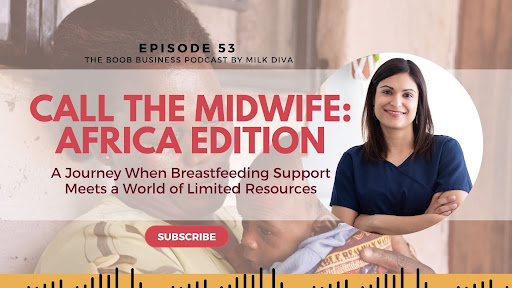
And that's the story I wanted to share in Episode 53 of The Boob Business Podcast.
🎧 Watch Episode 53: Call the Midwife: Africa Edition
If you've ever wondered what breastfeeding support looks like outside the U.S., I hope you'll join me for this conversation.
Powered by